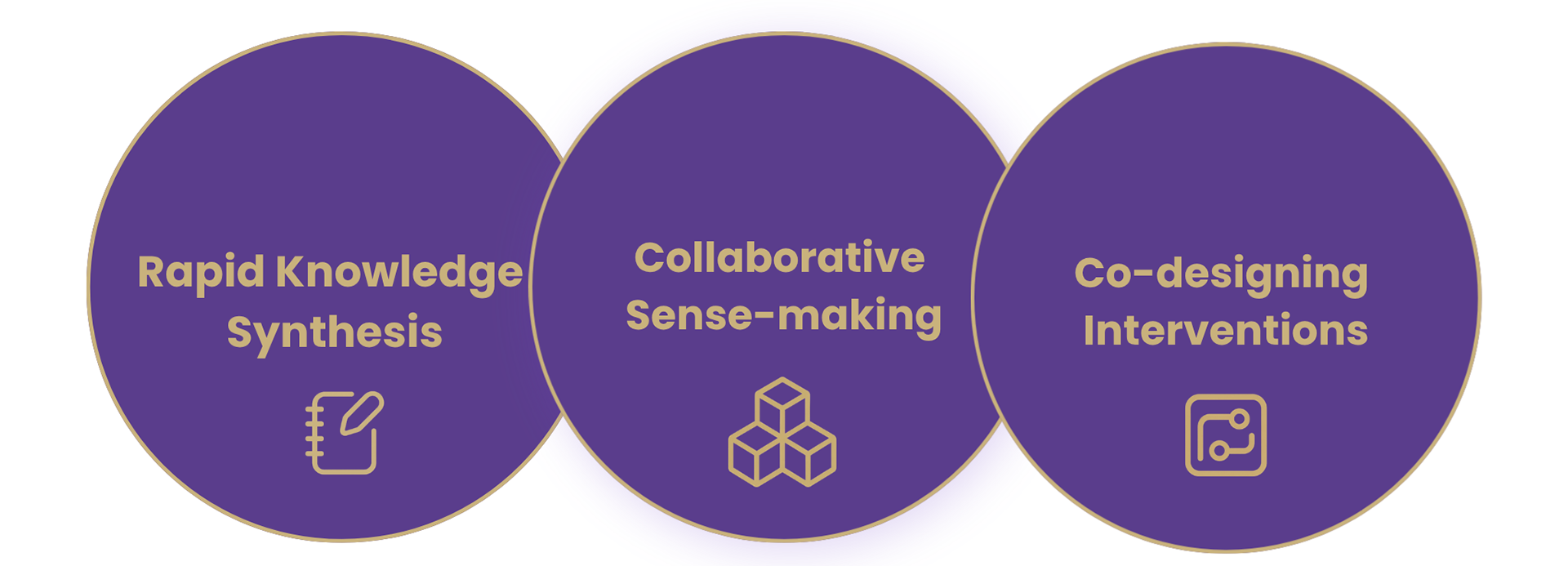
Turning under-used qualitative and mixed data into strategic insight for better decisions
The situation we're built for
Most organisations we work with aren't short on data. A programme team preparing for a donor review has FGD transcripts, case stories, and MIS reports piling up faster than anyone has time to read; a leadership team navigating a strategy reset has years of field notes and no structured way to ask what they add up to. What's missing isn't evidence, but the process to interpret it. Researchers call this "sense-making," and organisational scholar Karl Weick found it works best as a collaborative process, built from different people's perspectives, especially in ambiguous situations where cause and effect only become clear in hindsight. That's why we build interpretation into a process your team is part of: the people who lived the experience often see patterns a report alone would miss.
Most organisations we work with aren't short on data. A programme team preparing for a donor review has FGD transcripts, case stories, and MIS reports piling up faster than anyone has time to read; a leadership team navigating a strategy reset has years of field notes and no structured way to ask what they add up to. What's missing isn't evidence, but the process to interpret it. Researchers call this "sense-making," and organisational scholar Karl Weick found it works best as a collaborative process, built from different people's perspectives, especially in ambiguous situations where cause and effect only become clear in hindsight. That's why we build interpretation into a process your team is part of: the people who lived the experience often see patterns a report alone would miss.
A framework-based approach
We don't interpret your data by feel. Depending on the question, we draw on established methods: thematic analysis to identify patterns across interviews and transcripts, triangulation to check whether evidence sources agree, and participatory techniques like Most Significant Change when the question is what actually changed, beyond the logframe. The method follows the question, so what you get is a defensible answer, not just an impression.
We don't interpret your data by feel. Depending on the question, we draw on established methods: thematic analysis to identify patterns across interviews and transcripts, triangulation to check whether evidence sources agree, and participatory techniques like Most Significant Change when the question is what actually changed, beyond the logframe. The method follows the question, so what you get is a defensible answer, not just an impression.